Go Ad-Free
If you regularly use Hymnary.org, you will definitely enjoy all the perks of a Hymnary Pro subscription. Plus, your subscription supports our mission in a big way!

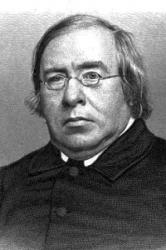 Bethune, George Washington, D.D. A very eminent divine of the Reformed Dutch body, born in New York, 1805, graduated at Dickinson Coll., Carlisle, [PA], 1822, and studied theology at Princeton. In 1827 he was appointed Pastor of the Reformed Dutch Church, Rinebeck, New York. In 1830 passed to Utica, in 1834 to Philadelphia, and in 1850 to the Brooklyn Heights, New York. In 1861 he visited Florence, Italy, for his health, and died in that city, almost suddenly after preaching, April 27, 1862. His Life and Letters were edited by A. R. Van Nest, 1867. He was offered the Chancellorship of New York University, and the Provostship of the University of Pennsylvania, both of which he declined. His works include The Fruits of the Spirit, 1839; Sermo… Go to person page >









 My Starred Hymns
 My FlexScores
 My Hymnals
 My Purchased Files