Go Ad-Free
If you regularly use Hymnary.org, you will definitely enjoy all the perks of a Hymnary Pro subscription. Plus, your subscription supports our mission in a big way!

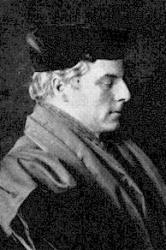 Dearmer, Percy, M.A., son of Thomas Dearmer, was born in London, Feb. 27, 1867, and educated at Westminster School and at Christ Church, Oxford (B.A. 1890, M.A. 1896). He was ordained D. 1891, P. 1892, and has been since 1901 Vicar of S. Mary the Virgin, Primrose Hill, London. He has been Secretary of the London Branch of the Christian Social Union since 1891, and is the author of The Parson's Handbook, 1st edition, 1899, and other works. He was one of the compilers of the English Hymnal, 1906, acting as Secretary and Editor, and contributed to it ten translations (38, 95, 150, 160, 165, 180, 215, 237, 352, 628) and portions of two others (242, 329), with the following originals:—
1. A brighter dawn is breaking. Easter. Suggested by… Go to person page >
Dearmer, Percy, M.A., son of Thomas Dearmer, was born in London, Feb. 27, 1867, and educated at Westminster School and at Christ Church, Oxford (B.A. 1890, M.A. 1896). He was ordained D. 1891, P. 1892, and has been since 1901 Vicar of S. Mary the Virgin, Primrose Hill, London. He has been Secretary of the London Branch of the Christian Social Union since 1891, and is the author of The Parson's Handbook, 1st edition, 1899, and other works. He was one of the compilers of the English Hymnal, 1906, acting as Secretary and Editor, and contributed to it ten translations (38, 95, 150, 160, 165, 180, 215, 237, 352, 628) and portions of two others (242, 329), with the following originals:—
1. A brighter dawn is breaking. Easter. Suggested by… Go to person page >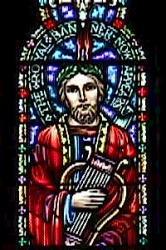 Venantius Honorius Clematianus Fortunatus (b. Cenada, near Treviso, Italy, c. 530; d. Poitiers, France, 609) was educated at Ravenna and Milan and was converted to the Christian faith at an early age. Legend has it that while a student at Ravenna he contracted a disease of the eye and became nearly blind. But he was miraculously healed after anointing his eyes with oil from a lamp burning before the altar of St. Martin of Tours. In gratitude Fortunatus made a pilgrimage to that saint's shrine in Tours and spent the rest of his life in Gaul (France), at first traveling and composing love songs. He developed a platonic affection for Queen Rhadegonda, joined her Abbey of St. Croix in Poitiers, and became its bishop in 599. His Hymns far all th… Go to person page >









 My Starred Hymns
 My Hymnals
 My Purchased Files