

 My Starred Hymns
 My FlexScores
 My Hymnals
 My Purchased Files


A Selection of Spiritual Songs #269
Display Title: Oh, see how Jesus trusts himself First Line: Oh, see how Jesus trusts himself Author: F. W. Faber Date: 1878
A Selection of Spiritual Songs #269
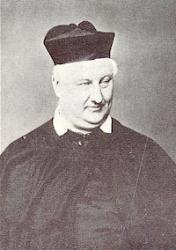 Raised in the Church of England, Frederick W. Faber (b. Calverly, Yorkshire, England, 1814; d. Kensington, London, England, 1863) came from a Huguenot and strict Calvinistic family background. He was educated at Balliol College, Oxford, and ordained in the Church of England in 1839. Influenced by the teaching of John Henry Newman, Faber followed Newman into the Roman Catholic Church in 1845 and served under Newman's supervision in the Oratory of St. Philip Neri. Because he believed that Roman Catholics should sing hymns like those written by John Newton, Charles Wesley, and William Cowpe, Faber wrote 150 hymns himself. One of his best known, "Faith of Our Fathers," originally had these words in its third stanza: "Faith of Our Fathers! Mary'… Go to person page >