Suggested tune: DIES SIND DIE HEILGEN
===============
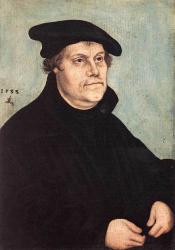
Mensch, willt du leben seliglich. M. Luther. [The Ten Commandments.] Written as a concise version for Catechetical use; and first published in the Geystliche gesangk Buchleyn, Wittenberg, 1524, Thence in Wackernagel, iii. p. 17, in 5 stanzas of 4 lines, and Kyrioleis. In Schircks's edition of Luther's Geistliche Lieder, 1854, p. 50, and the Unverfälschter Liedersegen, 1851, No. 364. Bode, p. 279, cites the Allg. Litter. Zeitung, Jena, 1803, No. 283, as saying that stanzas i. is found in a practically identical form in a Quedlinburg manuscript of 1481. Translated as:—
Wilt thou, 0 man, live happily. By R. Massie, in his Martin Luther's Spiritual Songs, 1854, p. 53, repeated in the Ohio Lutheran Hymnal, 1880, and by Dr. Bacon, 1884, p. 43.
Other translations are:—(1) "Man, wylt thou lyve vertuously," by Bp. Coverdale, 1539 (Remains, 1846, p. 545); (2) "If thou a holy life wouldst see," by Dr. J. Hunt, 1853, p. 82; (3) "Man, seekest thou to live in bliss," by Dr. G. Macdonald, in the Sunday Magazine, 1867, p. 571. In his Exotics, 1876, p. 87, it begins, "Man, wouldst thou live all blissfully." [Rev. James Mearns, M.A.]
--John Julian, Dictionary of Hymnology (1907)
Hymnary Pro Subscribers
Access
an additional article
on the Canterbury Dictionary of Hymnology:
Hymnary Pro subscribers have full access to the Canterbury Dictionary of Hymnology.
Get Hymnary Pro
Redirecting to the Canterbury Dictionary of Hymnology


 My Starred Hymns
 My FlexScores
 My Hymnals
 My Purchased Files