
1 Lord, for ever at Thy side
Let my place and portion be:
Strip me of the robe of pride,
Clothe me with humility.
2 Meekly may my soul receive,
All Thy Spirit hath revealed;
Thou hast spoken; I believe,
Though the oracle be sealed.
3 Humble as a little child,
Weaned from the mother's breast,
By no subtleties beguiled,
On Thy faithful word I rest.
4 Israel now and evermore,
In the Lord Jehovah trust;
Him, in all His ways, adore,
Wise, and wonderful, and just.
Source: The Church Hymnal: containing hymns approved and set forth by the general conventions of 1892 and 1916; together with hymns for the use of guilds and brotherhoods, and for special occasions (Rev. ed) #465
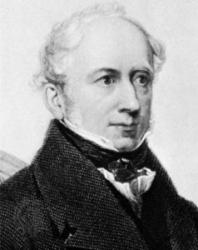
James Montgomery (b. Irvine, Ayrshire, Scotland, 1771; d. Sheffield, Yorkshire, England, 1854), the son of Moravian parents who died on a West Indies mission field while he was in boarding school, Montgomery inherited a strong religious bent, a passion for missions, and an independent mind. He was editor of the Sheffield Iris (1796-1827), a newspaper that sometimes espoused radical causes. Montgomery was imprisoned briefly when he printed a song that celebrated the fall of the Bastille and again when he described a riot in Sheffield that reflected unfavorably on a military commander. He also protested against slavery, the lot of boy chimney sweeps, and lotteries. Associated with Christians of various persuasions, Montgomery supported missio… Go to person page >| First Line: | Lord, forever at Thy side Let my place and portion be |
| Title: | Lord, For Ever at Thy Side |
| Author: | James Montgomery (1822) |
| Meter: | 7.7.7.7 |
| Language: | English |
| Copyright: | Public Domain |
Lord, for ever at Thy side. J. Montgomery. [Psalms cxxxi.] Published in Cotterill’s Selection, 8th ed., 1819, p. 73, in 4 stanzas of 4 lines, and headed, "For Humility." In 1822 it was repeated by Montgomery in his Songs of Zion, as a paraphrase of Psalms cxxxi.; in his Poetical Works, 1828; and his Original Hymns, 1853, No. 187. It is a most successful paraphrase, and is somewhat widely used.
--John Julian, Dictionary of Hymnology (1907)
My Starred Hymns