You help make Hymnary.org possible.

In 2025, more than 10 million people from 200+ countries found hymns, liturgical resources, and encouragement here. If Hymnary has meant something to you this year, would you take a moment to help sustain it? A gift of any size — and a note of encouragement, if you'd like to share one — directly supports the server costs, research, and curation that keep this resource freely available to the world.

Give securely online today, or mail a check to:
Hymnary.org (c/o Calvin University)
3201 Burton Street SE
Grand Rapids, MI 49546

Thank you for being part of this important online ministry resource.

Divine Majesty

Representative Text

1 Eternal Power, whose high abode
Becomes the grandeur of a God,
Infinite lengths beyond the bounds
Where stars revolve their little rounds:

2 Thee while the first archangel sings,
He hides his face behind his wings;
And ranks of shining ones around
Fall worshipping and spread the ground.

3 Lord, what shall earth and ashes do?
We would adore our Maker too!
From sin and dust to thee we cry,
The great, the holy, and the high!


Source: The New English Hymnal #207

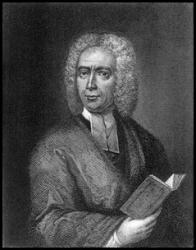
Author: Isaac Watts

Isaac Watts was the son of a schoolmaster, and was born in Southampton, July 17, 1674. He is said to have shown remarkable precocity in childhood, beginning the study of Latin, in his fourth year, and writing respectable verses at the age of seven. At the age of sixteen, he went to London to study in the Academy of the Rev. Thomas Rowe, an Independent minister. In 1698, he became assistant minister of the Independent Church, Berry St., London. In 1702, he became pastor. In 1712, he accepted an invitation to visit Sir Thomas Abney, at his residence of Abney Park, and at Sir Thomas' pressing request, made it his home for the remainder of his life. It was a residence most favourable for his health, and for the prosecution of his literary… Go to person page >

Text Information

First Line: Eternal Power! whose high abode
Title: Divine Majesty
Author: Isaac Watts (1718)
Meter: 8.8.8.8
Language: English
Copyright: Public Domain

Notes

Eternal Power, Whose high abode. I. Watts. [Praise to God.] This hymn supplies what the author called "The Conclusion," to his Horae Lyricae, 1705. It is in 6 stanzas of 4 lines, and is entitled "God exalted above all Praise." In 1743, J. Wesley included it, with the omission of stanzas ii., and the alteration of stanza i., line 3, of "length" to "lengths", and of stanza iii., line 1, from “Thy dazzling beauties whilst he sings," to "Thee, while the first archangel sings " (a change necessitated by the omission) in Psalms & Hymns, 1743, p. 66. In 1780 this version of the text was given in the Wesleyan Hymn Book, No. 307, and from the Wesleyan Hymn Book has passed into numerous collections in all English-speaking countries. According to Methodist usage Dr. J. Beaumont read the lines,

"Thee, while the first archangel sings,
He hides his face behind his wings,"

to the congregation in Waltham Street Chapel, Hull, on Sunday, Jan. 23, 1855; and during the singing of the second line he fell dead in the pulpit. The incident is given in detail in Stevenson's Methodist Hymn Book and its Associations, 1883, p. 225.

--John Julian, Dictionary of Hymnology (1907)

Hymnary Pro Subscribers
Access an additional article on the Canterbury Dictionary of Hymnology:
Hymnary Pro subscribers have full access to the Canterbury Dictionary of Hymnology. Get Hymnary Pro

Tune

ROCKINGHAM (Miller)

According to Chris Fenner of Hymnology Archive, Edward Miller arranged a hymn tune "which first appeared under the name TUNBRIDGE in Musica Sacra: Being a choice collection of psalm and hymn tunes...as they are used in the Right Hon. the Countess of Huntingdon’s Chapels, in Bath, Bristol, &c.…

Go to tune page >


Timeline

Media

The Cyber Hymnal #1352
  • Adobe Acrobat image (PDF)
  • Noteworthy Composer score (NWC)
  • XML score (XML)
Harmonia Americana: containing a concise introduction to the grounds of music; with a variety of airs, suitable fore divine worship and the use of musical societies; consisting of three and four parts #25
  • PDF (PDF)
  • MusicXML (made with MuseScore) (XML)
Urania: or a choice collection of psalm-tunes, anthems, and hymns, from the most approv'd authors, with some entirely new; in two, three, and four parts... #172

Instances in all hymnals

Instances (201 - 230 of 230)
Page Scan

The Revivalist #451

The Sacred Lyre #d75

Page Scan

The Sanctuary Hymnal, published by Order of the General Conference of the United Brethren in Christ #33

TextPage Scan

The Seventh-Day Adventist Hymn and Tune Book #50

Page Scan

The Southern Methodist hymn and tune book #6

Page Scan

The Springfield Collection of Hymns for Sacred Worship #19

Page Scan

The Standard Church Hymnal #114

The Sunday School Choir and Superintendent's Assistant #d30

Page Scan

The Tribute of Praise and Methodist Protestant Hymn Book #90

Page Scan

The Tribute of Praise #90

Page Scan

The Tribute of Praise #90

The Universalist Hymn Book #d113

Page Scan

The Universalist Hymn-Book #303

Page Scan

The Virginia Selection of Psalms and Hymns and Spiritual Songs #20

TextPage Scan

The Voice of Praise #337

Page Scan

The Wesleyan Methodist Hymnal #12

Page Scan

The Wesleyan Sacred Harp #27b

Page Scan

The Wreath of Gems #113

Page Scan

The Young People's Chorister #267b

Union Hymns. Rev. #d85

Union Hymns. Rev. #d86

Universalist Hymn Book #d102

TextScoreAudioPage Scan

Urania #172

Village Hymns #15

Page Scan

Village hymns for social worship, selected and original #15

Page Scan

Village hymns for social worship, selected and original #15

Page Scan

Village Hymns for Social Worship, Selected and Original #15

Virginia Selection of Psalms #d113

Page Scan

Wesleyan Hymn and Tune Book #27b

Pages

Exclude 227 pre-1979 instances
Suggestions or corrections? Contact us
It looks like you are using an ad-blocker. Ad revenue helps keep us running. Please consider white-listing Hymnary.org or getting Hymnary Pro to eliminate ads entirely and help support Hymnary.org.