1 Blest be that dear uniting love
that will not let us part;
our bodies may far off remove,
we still are one in heart.
2 Joined in one spirit to our Head,
where He appoints we go,
and still in Jesus' footsteps tread,
and do His work below.
3 O may we ever walk in Him,
and nothing know beside;
nothing desire, nothing esteem,
but Jesus crucified!
4 We all are one who Him receive,
and each with each agree;
in Him the One, the Truth, we live
blest point of unity!
5 Partakers of the Savior's grace,
the same in mind and heart,
nor joy, nor grief, nor time, nor place,
nor life, nor death can part.
Source: Our Great Redeemer's Praise #389
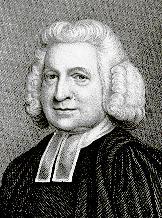
Charles Wesley, M.A. was the great hymn-writer of the Wesley family, perhaps, taking quantity and quality into consideration, the great hymn-writer of all ages. Charles Wesley was the youngest son and 18th child of Samuel and Susanna Wesley, and was born at Epworth Rectory, Dec. 18, 1707. In 1716 he went to Westminster School, being provided with a home and board by his elder brother Samuel, then usher at the school, until 1721, when he was elected King's Scholar, and as such received his board and education free. In 1726 Charles Wesley was elected to a Westminster studentship at Christ Church, Oxford, where he took his degree in 1729, and became a college tutor. In the early part of the same year his religious impressions were much deepene… Go to person page >| First Line: | Blest be the dear united love |
| Title: | Closing Conference |
| Author: | Charles Wesley (1742) |
| Meter: | 8.6.8.6 |
| Language: | English |
| Copyright: | Public Domain |
Blest be the dear uniting love. C. Wesley. [Parting.] Published in Hymns & Sacred Poems, 1742, p. 159, in 8 stanzas of 4 lines, and again Poetical Works, 1868-72, vol. ii. p. 221. It was given in the Wesleyan Hymn Book, 1780, No. 520, with alterations, and the omission of stanzas v. and vi. This form of the hymn is in the revised edition, 1875, No. 534, and in most collections of the Methodist body. From Whitetield's Collection 1753, to the present it has also been in use amongst various denominations in one form or another, ranging from 5 stanzas in Whitefield to 3 stanzas as in several American collections. This hymn has been ascribed to J. Cennick in error.
-- John Julian, Dictionary of Hymnology (1907)
My Starred Hymns